
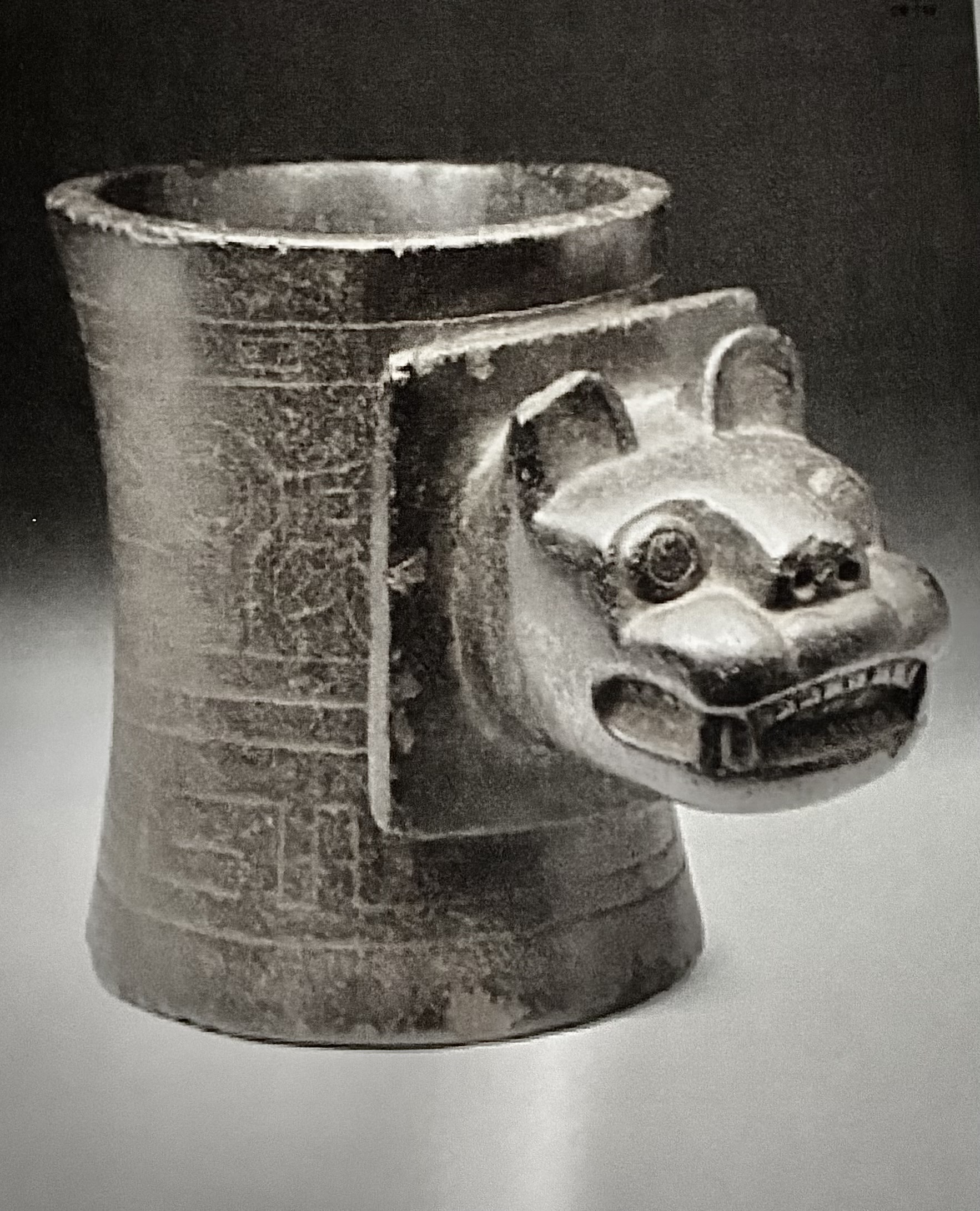
A Bolivian artefact1 bought from a Colorado dealer by Palmanova was forfeited after import under cultural heritage laws2. It had to be shown that a ‘protected object of a foreign country has been exported from that country’ and that the ‘export was prohibited by a law of that country’. It was established that (A) the artefact came from near Lake Titicaca in Bolivia, (B) a 1906 Bolivian statute prohibited its export, and (C) export had taken place at least by the 1950s3. Did the phrase ‘has been exported’ in our legislation mean the artefact had to have been exported from Bolivia after our law came into force? Answer – ‘no’. Syntax, context and purpose all confirmed that export from Bolivia need only be established as a historical fact at the time of import. No further ‘temporal limitation’ applied4. In this case, High Court judges made important points about interpretation.
Gordon Brysland – Tax Counsel Network gordon.brysland@ato.gov.au 0417 605 338
See here for the official PDF of Episode 125 of interpretation NOW!
Statements of orthodoxy
The plurality (at [4-5]) began by restating several bedrock norms. First and foremost, interpretation is about the attribution of meaning to the text. That process ‘begins and ends’ with the text ‘understood in context and in light of the statutory purpose’. The purpose is what the provision is designed to achieve in fact5, as is discernible from text and context6.
The meaning which must be preferred is that which would best achieve the statutory purpose or object of the provision in question7. CIC Insurance is quoted in support of the requirement to have regard to context both up-front and in the ‘widest sense’8. These propositions, which are well-established and often confirmed, set the scene for one particular issue the High Court appears to have been concerned about9.
Forensic impact of s 15AB
The plurality (at [5]) pointed out that the use of extrinsic materials is ‘guided but not governed’ by the non-exhaustive list of sources in s 15AB(2) ‘recognised to have potential to illuminate the statutory context’. On this issue, Edelman J (at [77]) referred to the ‘cautious approach’ of the FCAFC to extrinsic materials, and to the superficial tension between s 15AB(1) and the ‘modern approach’.
In practice, said the judge, reference to ambiguity in s 15AB ‘reflects the modern approach’. This is because ‘ambiguity includes latent ambiguity, the existence of which cannot be eliminated without reference to extrinsic materials’11. Also, s 15AB is ‘facultative’ and was enacted at a time the common law rules were ‘neither clear nor convincing’12.
Duty to consider context
The FCAFC upheld forfeiture of the artefact on the basis the text was ‘clear’ making it ‘unnecessary to consider’ extrinsic materials10. While the ultimate answer was correct, the way of getting there was flawed. The plurality (at [6]) said that focus on the text ‘is not to the exclusion of extrinsic material that has the potential to assist in fixing its meaning’.
Attention to the wider context was needed in order to understand how the forfeiture provisions were to operate within the statutory scheme as a whole. The FCAFC, therefore, had departed from a central obligation under the ‘modern approach’ – that being, to investigate context in the ‘widest sense’ from the get-go. iTip – there is no category of ‘clear on its face’ outcomes which escape this basic requirement.
Redundancy argument
One argument put by Palmanova was that, if the phrase ‘has been exported’ was read simply as ‘was exported’, parliament was guilty of surplusage in violation of the basic presumption that all statutory words are to be given some meaning and effect13.
Edelman J (at [72]) said that legal instruments are generally to be construed by reference to the ‘same ordinary language techniques used in society’, and that presumptions of this kind are ‘only loose aids to ascertaining meaning’. In any event, there may be a number of reasons for surplusage14. Context and purpose are ‘surer guides’ to meaning than the logic with which provisions are constructed15. Edelman J concluded that context and purpose far outweighed the slight force of a ‘few redundant words’ here.
Thanks – Matt Freestone, Michael Mirtsis, Patrick Boyd & Jeremy Francis.
Footnotes:
1 Pictured – made by Tiwanaku people c600-1000AD; price US$17,340.
2 s 14(1) of the Protection of Movable Cultural Heritage Act 1986 (Cth).
3 Perram J at trial [2023] FCA 1391 [338] – ‘an exceptional and unique piece’.
4 The present perfect tense signalled reference to a past historical fact only.
5 NZYQ [2023] HCA 37 [40] cited, cf Farmer [2025] HCA 38 [54].
6 YBFZ [2024] HCA 40 [16] cited, cf Alexander [2022] HCA 19 [104-105].
7 s 15AA of the Acts Interpretation Act 1901, cf SZTAL [2017] HCA 34 [39].
8 Newcastle (1997) 191 CLR 85 (112-113), Network Ten [2004] HCA 14 [11] cited.
9 The court granted special leave only to dismiss the appeal unanimously.
10 But later looked at them [2024] FCAFC 90 [27], cf Edelman J [76].
11 cf FX Group [2025] NSWSC 1055 [234], Cherry [2017] NSWCA 295 [68-86].
12 [79] Dharmananda Sliding Doors (2024) 35 Public Law Review 105 (105).
13 [71] see Perram J at trial, cf Farmer [2025] HCA 38 [105].
14 [73] Emphasis, coverage, caution, looseness or simple inadvertence.
15 [75] Project Blue Sky [1998] HCA 28 [69], Agalianos 92 CLR 390 (397).